Staying Part of the Conversation: Hearing Health and Cognitive Health
In a significant update to its dementia guidance, the World Health Organization (WHO) now recognizes hearing aids as an intervention that may form part of dementia risk-reduction strategies. This builds on its 2019 guidance identifying hearing loss challenges as a potentially modifiable risk factor for cognitive decline and dementia.
For people experiencing changes in their hearing, this highlights the importance of understanding the connection between hearing health, communication, and overall cognitive well-being.
The Extra Work Behind Understanding Speech
When parts of speech are unclear, your brain has to work harder to fill in the gaps and make sense of what is being said while also trying to keep up with the conversation.
As a result, more mental resources may be directed toward processing and interpreting sound, leaving fewer available for other cognitive functions, such as maintaining focus, remembering information, or working through a problem. Over time, the additional effort involved in listening, known as cognitive load, can make conversations feel tiring.
If you regularly struggle to follow conversations, you may also find yourself avoiding busy restaurants or situations where several people are talking at once. You might speak less often because you’re unsure you’ve heard correctly or gradually withdraw from activities you once enjoyed.
Reduced social engagement and social isolation are associated with cognitive decline, making staying socially connected an important part of supporting brain health. Hearing support may help make communication easier and more manageable, so you can continue taking part in the activities and conversations that matter to you.
Why Hearing Care Is Receiving Greater Attention
The WHO released the second edition of its dementia risk-reduction guidelines in July 2026, reflecting the growing evidence around factors that may influence cognitive health and dementia risk.
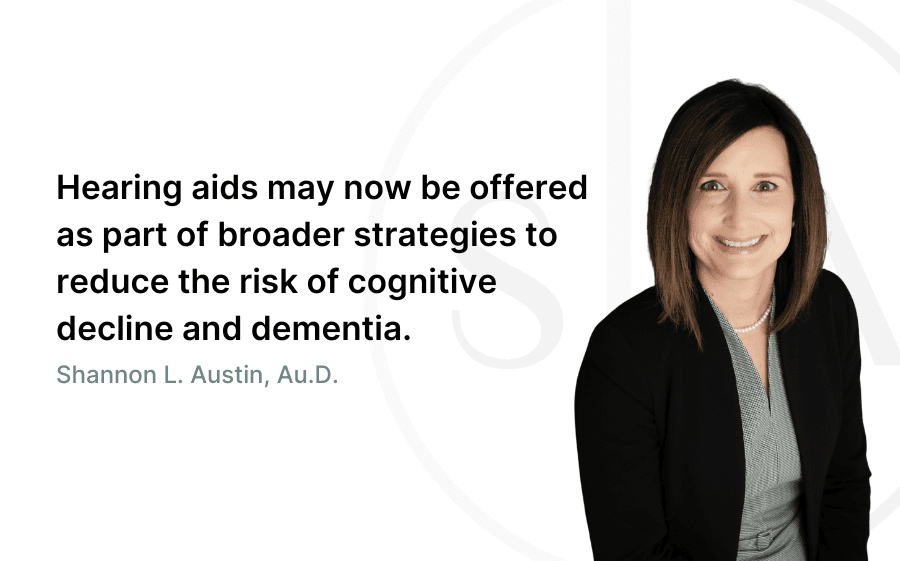
One notable change is the guidance on hearing; hearing aids may now be offered as part of broader strategies to reduce the risk of cognitive decline and dementia, reinforcing the importance of addressing hearing difficulties when they are identified.
For you, the practical message is simple: if you have noticed changes in your hearing, having it assessed can help you understand what is happening and whether support could be beneficial.
Taking the Next Step
A hearing assessment is an opportunity to understand how you hear in everyday situations and what kind of support could fit your needs and lifestyle.
During your assessment, you may be asked about your hearing history, the difficulties you experience day-to-day, and any concerns you have. Hearing assessments can help determine your level of hearing ability and identify whether hearing difficulties are present, including their type and severity.
Your results provide a starting point for discussing what may help, whether that involves hearing aids, communication strategies, assistive listening technology, or other forms of support. These will be explained clearly, with time to ask questions and discuss your options, so you can make an informed decision about the support that is right for you.
Contact the team at SLA Audiology today to schedule an appointment or request a callback.
Frequently Asked Questions
Q: Can hearing challenges make me seem forgetful?
A: If you don’t hear information clearly, you may have trouble recalling it later because you missed parts of the original message, which can create confusion during everyday conversations.
However, hearing difficulties should not be assumed to explain persistent memory changes. If you have ongoing or worsening memory concerns, you should still discuss these with your primary care provider so that both areas receive attention.
Q: Should I consider hearing aids because I’m worried about dementia?
A: Hearing aids do not guarantee that you will not develop dementia, nor are they a treatment or cure for dementia. However, if you have hearing difficulties, using hearing aids may make it easier to follow conversations, stay socially connected, and reduce the effort required to listen. These benefits can help support cognitive health and reduce the risk of cognitive decline.
Q: What early signs suggest that I should have my hearing checked?
A: Signs of hearing difficulty can be subtle, particularly when changes develop gradually. You may find yourself asking people to repeat themselves more often, turning up the television, or noticing that certain voices or words sound muffled or unclear.
You might also find it harder to follow conversations when there is background noise, such as in a restaurant or when several people are talking at once. Some people begin relying more heavily on facial expressions or context to work out what has been said.
As hearing changes can happen slowly, you may adapt to them without realizing how much extra effort you are putting into listening. A hearing assessment can help identify difficulties that you may not have recognized yourself and provide a clearer picture of how well you are hearing across different situations.
Sources
· World Health Organization: Risk reduction of cognitive decline and dementia, second edition
· The Hearing Review: WHO updates dementia prevention guidance and hearing care priorities

Search
Request a Callback
Get expert hearing care at SLA Audiology. Whether you need a hearing test, tinnitus treatment, or custom hearing solutions, our specialists are here to help.